Amazon's Anthropic Deal Turns AWS Compute Into a 10-Year Capital Allocation Story
Anthropic's new AWS commitment is not just another AI partnership headline. It gives investors a clearer read on how Amazon may turn AI infrastructure spending, Trainium adoption, and Bedrock distribution into a longer-duration earnings story.
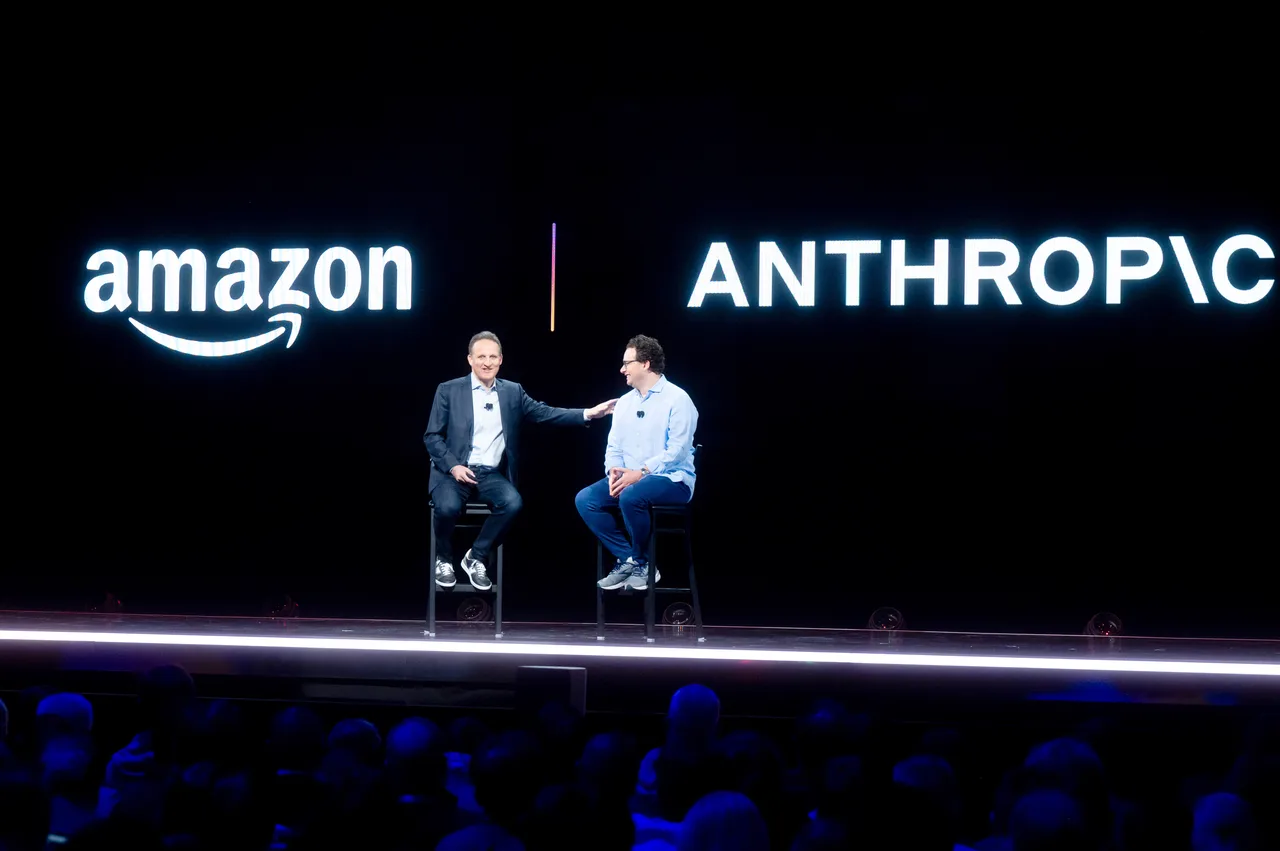
Anthropic's April 20 announcement with Amazon is easy to misread as one more AI tie-up in a market already full of them. The actual terms are much more consequential. Anthropic said it has signed a new agreement with Amazon that commits more than $100 billion over the next ten years to AWS technologies, secures up to 5 gigawatts of compute capacity for training and deploying Claude, and adds a new $5 billion Amazon investment today with up to another $20 billion possible later. For investors in Amazon, that is not a branding headline. It is a concrete capital-allocation datapoint for how AWS intends to monetize the AI buildout.
The differentiated angle from 13F Insight's side is that this deal is landing into one of the broadest and deepest institutional owner bases in U.S. equities. We track 6,262 current institutional holders in Amazon, and the top of that register still looks like a patient mega-cap coalition rather than a restless activist setup. That matters because the market is being asked to fund a cloud provider that is simultaneously spending heavily on AI infrastructure and trying to prove those investments will produce durable demand. If the shareholder base were fragile, a commitment this large could invite immediate doubts about returns. Instead, Amazon still looks owned by institutions prepared to let AWS scale into the opportunity.
This is a compute reservation, not a vague partnership memo
Anthropic's wording is specific enough to matter. The company said the agreement secures up to 5GW of new capacity to train and run Claude, including significant Trainium2 capacity in the first half of this year and nearly 1GW of combined Trainium2 and Trainium3 capacity by the end of 2026. It also said more than 100,000 customers already run Claude on Amazon Bedrock, and that the full Claude Platform will be made available directly within AWS under the same account, controls, and billing. Put differently, Amazon is not just hosting another model provider. It is trying to lock both model training demand and application-layer distribution into the AWS stack.
That is what makes this a capital allocation story. If Anthropic follows through on the spend and capacity commitments, the upside for Amazon is not limited to a single equity investment. Amazon gets validation for Trainium, a larger captive workload for AWS infrastructure, and a stronger claim that Bedrock can be both a model marketplace and an enterprise control plane. In AI terms, this is one of the cleaner examples yet of a cloud provider turning infrastructure intensity into a product moat rather than a cost center.
What the holder base says about who owns this thesis
13F Insight's data shows the current Amazon register is still dominated by large, long-duration institutions. The biggest reported positions belong to Vanguard, BlackRock, State Street, FMR, and Geode Capital Management, with reported position values in our current data of roughly $195.1 billion, $169.8 billion, $89.7 billion, $76.5 billion, and $51.8 billion. Two of those holders are clearly index-heavy names, so this is not evidence of an activist growth campaign. But the composition still matters. Amazon's AI capex debate is being underwritten by institutions that already own the stock as a long-horizon platform, not as a short-term special situation.
The absence of noise around the register matters too. We do not see an active 13D campaign around Amazon in the current data, and we do not see a recent insider-transaction cluster that would suggest management is trying to sell the market on a more fragile thesis. That leaves investors with a cleaner read: the burden of proof is on execution, not on governance stability. Amazon can spend aggressively because the ownership base still appears willing to accept a multi-year infrastructure payback period if AWS remains one of the central rails of enterprise AI adoption.
Why this matters more for AWS than for headline AI sentiment
The market already knows Amazon is spending. What it needs is better evidence that those dollars are attracting committed workloads rather than speculative demand. Anthropic's statement helps on that front. A ten-year technology commitment, explicit reference to current and future Trainium generations, and a capacity roadmap tied to 2026 all move the story away from abstract enthusiasm. This is closer to a reservation book. It also supports the idea that Amazon wants AI economics to run through its own silicon whenever possible, not just through third-party accelerators.
That strategic point matters in competitive terms. Anthropic noted that Claude remains available across AWS, Google Cloud, and Microsoft Azure, but this new agreement still gives Amazon a more direct claim on the infrastructure layer. For shareholders, that is the key distinction. Amazon's holder base is not paying for AI buzz in the abstract; it is paying for AWS to retain pricing power, capacity utilization, and platform relevance even as the model layer becomes more crowded. The deal strengthens that case because it ties a major frontier lab's growth to Amazon's chips, data-center footprint, and enterprise distribution.
The real watch points run through 2026, not just this week's headlines
The near-term anchors are unusually clear. Anthropic said new Trainium2 capacity is coming online in the first half of 2026, scaled Trainium3 capacity is expected later this year, and nearly 1GW of Trainium2 and Trainium3 capacity should be online by year-end. Those are the milestones that matter. If AWS can show real deployment against that timetable, investors may become more comfortable treating AI infrastructure spending as a demand-backed expansion rather than an open-ended margin drag. If those milestones slip, the narrative changes quickly.
For now, the ownership data says Amazon has room to pursue the strategy. The company remains held by an institutional base large enough to absorb heavy AI spending as long as the spending can be tied to durable customer demand and platform entrenchment. That is the most useful way to read the Anthropic deal. It is not simply an endorsement of AI. It is evidence that Amazon is trying to convert AI compute scarcity into a long-duration AWS earnings stream, and that the shareholder register still looks built to tolerate the scale and timing of that bet.

Breaking News Editor at 13F Insight. First to report on major SEC filings, institutional moves, and regulatory developments.
More from Alex →Add the funds and stocks mentioned here to a free watchlist, or get an email the next time they file — no card required.