Coinbase Faces Senate Crypto Bill Vote: Market-Maker-Heavy Tape
The Senate Banking Committee is set to vote on landmark digital asset legislation that would reshape how exchanges like Coinbase report and custody assets. Our 1,300-name institutional holder map tells a story most coverage misses: the top of the tape is dominated by market makers, not active conviction.
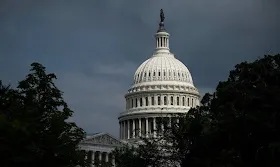
The Senate Banking Committee is moving toward a vote on landmark digital-asset legislation that would, for the first time, set federal market-structure rules for crypto exchanges, custodians, and stablecoin issuers. A Bloomberg story flagged the fight between traditional bank lobbies and crypto backers as the bill works through markup. Coinbase is the largest publicly-traded venue with material exposure to whichever way the markup lands — and what its institutional ownership map shows right now is that the loudest seat at the table is not where the headlines look.
13F Insight tracks 1,300 institutional holders of COIN. The single largest reported position in the top twenty is not an asset manager — it's a market maker. Susquehanna International Group reports $4.39B of COIN exposure, and Jane Street Group reports $3.54B. Add CTC LLC ($1.31B), Wolverine Trading ($1.18B), and PEAK6 LLC ($0.93B), and the market-maker tier represents over $11B of disclosed dollar weight at the top of the COIN holder list. That dollar weight is not directional opinion. It is option-hedge inventory and exchange-route flow offset.
Why the MM Skew Matters for a Regulatory Print
Regulatory news on COIN routes through volatility before it routes through long-term holders. The bill's markup will reset implied vols on every COIN option chain — and the MM book has to rebalance gamma into that move. Susquehanna, Jane Street, and CTC are the firms that will be moving on the day of the vote, not because they have a view on whether Senator Hagerty's market-structure framework is good policy, but because their delta hedge requires it.
This is the structural reason COIN trades like a leveraged crypto-policy proxy on regulatory news days. The MM-heavy ownership tape amplifies short-dated price action because the hedging book is mechanically forced to participate in either direction. The active conviction layer — the holders who'd actually trade off the policy substance — is a much smaller slice of the same list.
The Active Conviction Layer
Strip out the passives (BlackRock at $3.86B, Vanguard Capital Management at $2.47B, State Street at $2.14B, Geode Capital Management at $1.37B) and the market makers, and the directional-conviction holders in COIN's top 20 are a short list:
- Citadel Advisors — $2.12B (multi-strategy; partial directional read).
- Tidal Investments LLC — $1.35B. Tidal Financial Group is an ETF white-label operator, and the position likely reflects crypto-thematic ETF book exposure rather than a single-name view.
- Morgan Stanley — $0.98B.
- Paradigm Operations LP — $0.96B. Crypto-native; one of the most direct conviction reads in the entire tape. Paradigm's continued size at this level is the closest thing to a 'crypto VC sees the regulatory path as survivable' signal in the ownership data.
- ARK Investment Management — $0.57B. Cathie Wood's ARK funds have been long-conviction COIN holders since the direct listing.
- Norges Bank — $0.66B (sovereign wealth).
Paradigm and ARK are the two names whose 13F moves would carry the most signal value if they trim or add post-vote. Paradigm is a crypto-native venture firm running a long-only book on top of disclosed public positions; their COIN sizing is functionally a view on the survival of US crypto infrastructure. ARK's position is more public — Wood's team has been vocal about COIN as a bet on US regulatory normalization, and the post-vote 13F will be read closely against that thesis.
What the 13D/G Tape Tells You (And What It Doesn't)
There are no active 13D filings on COIN and no recent 13G crossings of the 5% threshold by any active filer. This is the ownership-structure equivalent of saying: there is no public activist campaign, no proxy fight, no concentrated single-investor bloc that could weigh in on the bill markup as an aligned voice. Whatever pressure ends up shaping the bill at the venue level comes from Coinbase's direct lobbying and the broader crypto industry — not from a 5%+ shareholder coalition forcing the company's hand.
The lack of any recent insider Form 4 activity also matters. There are no insider sells clustered around the Senate markup window — a useful negative data point given how often regulatory uncertainty is met with insider distribution at smaller exchanges. The Brian Armstrong and senior-executive Form 4 tape is quiet, which suggests insiders aren't pricing this markup as a binary catalyst.
The Anchor Dates
- Senate Banking markup vote: scheduled in the current legislative window. The vote itself is the first move; the floor schedule and conference with the House version are the path to enactment.
- Coinbase Q2 2026 earnings: late-July or early-August 2026 window. This will be the first earnings call to reflect post-markup positioning — particularly on whether the bill changes Coinbase's stablecoin economics or staking-revenue treatment.
- Q2 2026 13F deadline: mid-August 2026 (45 days post 2026-06-30 quarter-end). First filing cycle that would show whether Paradigm, ARK, and the active conviction layer added or trimmed in the bill's vote and aftermath.
- Next 13D/G filings: an active filer crossing 5% would trigger a 13G (passive) or 13D (active). A 13D crossing in a regulatory window would be the strongest activism signal possible.
The Bloomberg framing on the Senate vote is correct as far as banks-vs-crypto goes, but the COIN ownership reality is more boring and more illuminating: the dollar weight at the top is hedge book, not opinion. The opinion sits in Paradigm, ARK, Citadel's directional sleeve, and a thin layer of bank asset managers. See COIN's full 1,300-holder institutional map →
For broader context on how to read market-maker concentration in any stock — and what it does and doesn't say about institutional conviction — our learn library covers the filer-classification framework that powers this analysis. Cross-stock confluence around the crypto-policy vote will surface in the smart-money signal feed as 13F and 13D filings update.

Breaking News Editor at 13F Insight. First to report on major SEC filings, institutional moves, and regulatory developments.
More from Alex →Add the funds and stocks mentioned here to a free watchlist, or get an email the next time they file — no card required.