Pentagon Picks Palantir for Classified AI: PLTR Holder Map
The Defense Department's classified-systems AI roster names Palantir alongside six peers. Strip out the index and market-maker names from the holder file and a much narrower group of active managers — Citadel, JPMorgan, Morgan Stanley, Norges Bank, D. E. Shaw — emerges as the real conviction stack carrying PLTR into this contract cycle.
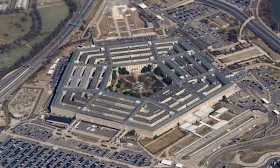
The Defense Department this week disclosed agreements with seven technology companies to integrate their AI systems into classified U.S. military environments — and Palantir Technologies sits at the center of the list. AP News, which broke the story, framed the deals as a structural step toward letting commercial AI models touch classified data flows, not just an unclassified procurement footnote. For PLTR investors, the more interesting question is what the platform's 3,099-strong institutional holder file reveals about who has been positioning for exactly this kind of moment.
Pull up PLTR's holder map on 13F Insight and the headline numbers are loud: $267.5 billion in aggregate institutional reported value, and a top five led by Vanguard ($38.3B), BlackRock ($34.4B), State Street ($18.2B), Susquehanna International Group ($9.7B) and Geode ($9.6B). Three of those names are passive index complexes; one is a market-maker inventory book. None of them rebalanced into Palantir because of conviction in the Pentagon AI thesis. They hold because S&P 500 and Russell 1000 mandates require it, or because options market-making demands underlying inventory. Treating that mass as institutional endorsement of the defense AI moat is exactly the misread the platform's filer classification framework exists to prevent.
Where the Real Conviction Sits
Strip the passive indexers and the options-makers out of the top 20 and a much narrower book emerges — the active managers who chose PLTR over their benchmark. The standouts:
- Citadel Advisors LLC — $7.6B reported value, the largest discretionary position outside the index complex. Citadel's multi-strategy book rarely sits this large in a single name without an underlying thesis.
- JPMorgan Chase & Co. — $6.3B across its asset-management arm.
- Morgan Stanley — $5.2B, sitting alongside the firm's well-known sell-side coverage of the name.
- Norges Bank — $5.15B from Norway's sovereign wealth fund, which runs an active overlay on top of its index core. Norges' presence at this size signals deliberate exposure rather than passive replication.
- Invesco — $4.0B.
- FMR LLC (Fidelity) — $3.4B across the Fidelity active fund family.
- Amundi — $2.85B.
- D. E. Shaw & Co. — $2.73B from one of the most quantitatively-driven holders in the book.
That is roughly $37 billion of active-manager exposure to PLTR before the Pentagon news landed. The contract roster does not change those positions overnight — the most recent 13F snapshot reflects positions as of the prior quarter-end, and you can verify the underlying filings through PLTR's SEC EDGAR institutional ownership history. But it does sharpen what the next quarterly cycle is going to test: whether this same active stack adds, holds, or trims into the contract announcement.
Reading the Pentagon Roster Through an Ownership Lens
The seven-company list, per AP, sits at the intersection of three publicly-traded names — Palantir, Microsoft, and Alphabet — plus four private AI labs (Anthropic, OpenAI, Scale AI and others). Of those three public peers, Palantir is the only one whose business model is dominated by classified-systems work. Microsoft's defense AI footprint is a rounding error inside Azure. Alphabet's is smaller still, and politically contentious internally. That asymmetry is precisely why PLTR's institutional ownership reads differently than the megacaps' — the active book is a proxy for one specific bet, not for a broad-based AI capex story.
Compare PLTR's active concentration to peer megacap AI names. Microsoft's top active holders span dozens of conviction-grade managers because the underlying business spans hundreds of product lines. Palantir's active book is far narrower: roughly a dozen names control most of the discretionary float. That concentration cuts both ways. It means a single fund-level rebalance can move the marginal price more than it would in a megacap. It also means tracking PLTR's institutional holder feed across the next two filing windows will reveal conviction shifts faster than for a more diluted name.
What's Missing — and What That Tells You
Two structural absences in the data are worth flagging. First, no active 13D/G filings — meaning no holder has crossed the 5% activist or substantial-beneficial-owner thresholds that trigger the more aggressive disclosure regime. The institutional posture is large in dollar terms but fragmented enough that no single fund is positioning as a control or activist holder. Second, no recent insider Form 4 selling spike on the name — which, given Palantir's history of executive selling around news catalysts, is itself a notable absence. Investors who want to see whether that changes can monitor the PLTR Form 4 feed on SEC EDGAR in the days following the contract announcement.
The Forward Test
The next 13F deadline is the August 14, 2026 cycle, covering positions as of June 30, 2026 — the first full quarter that captures any post-announcement repositioning. The honest read: if the active conviction holders named above add into the contract news, the institutional thesis has shifted from "AI software platform with defense optionality" to "defense AI prime contractor." If they trim, the read is that the contract was already in the price. Either way, the answer arrives in mid-August, not from sell-side reaction notes this week.
For now, the data point worth carrying forward is this: the Pentagon roster validates a thesis that roughly $37 billion of active institutional capital was already paying for. Whether that capital adds is the question worth tracking — and the holder file is where the answer will land first. Track institutional repositioning on Palantir as the August 14 13F window opens → PLTR holder feed.

Breaking News Editor at 13F Insight. First to report on major SEC filings, institutional moves, and regulatory developments.
More from Alex →Add the funds and stocks mentioned here to a free watchlist, or get an email the next time they file — no card required.